
How to choose RTM software for your clinic
Compare Orva with Limber, Medbridge, SaRA and Keet on the questions that decide whether RTM works, starting with who cares for your patients between visits.
7-day free trial · No credit card · Set up in your clinic today


 and more
Four questions that decide which RTM platform fits
-
Who cares for patients between visits?
Your own therapists, or a vendor's staff your patients have never met.
-
What do patients use at home?
An app they want to open, or a text they answer and forget.
-
Who owns the product?
An independent company, or one of several overlapping products under a larger parent.
-
Can you try it first?
A free trial in your own clinic, or a contract before you see it work.
The RTM platforms, side by side
Detailed comparisons
Medicare has proposed ending payment for outsourced RTM
Under the proposed 2027 Physician Fee Schedule, RTM would be paid only when the work is done by staff the billing practice employs. Before you sign with any vendor, ask who does the work between visits.
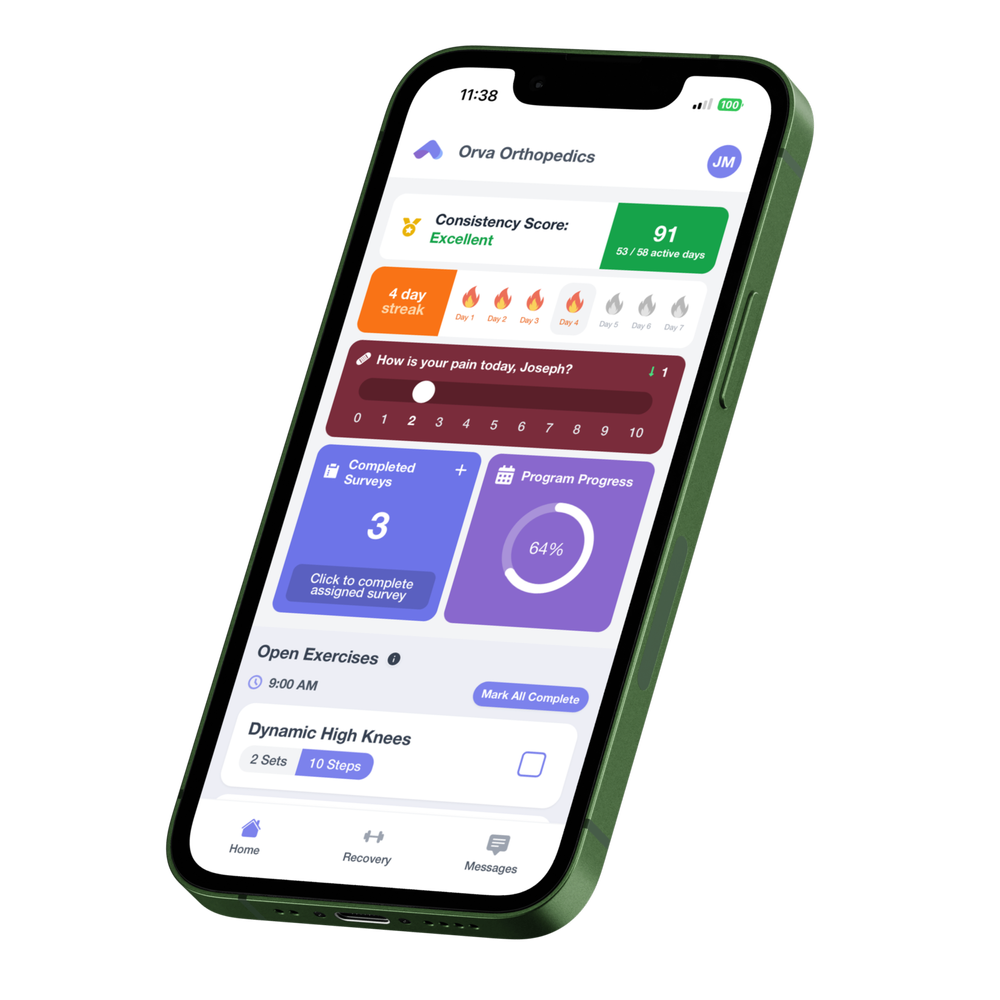
“We’d considered RTM for a while, but nothing felt right for our patients or our staff, until Orva. Our own therapists stay connected with patients between visits, patients want to use the app, and every requirement is tracked in the background. It fits right into how we already work, making the BIG Difference, and the Orva team has been with us every step of the way. It’s the best HEP and RTM platform we’ve used.”
Common questions about RTM software
What matters most when choosing RTM software?
Whether patients keep using it and whether your own team can see what qualifies before the month closes. RTM device codes depend on days of patient data each month, so engagement drives everything else.
What does Medicare's 2027 proposal mean for RTM vendors?
If finalized, RTM would be paid only when the work is done by clinical staff the billing practice employs. Programs that rely on a vendor's own staff for care between visits would need a plan before January 1, 2027.
Which RTM codes should software support?
All six musculoskeletal RTM codes, 98975, 98985, 98977, 98979, 98980 and 98981. 98985 and 98979 were added in 2026, so ask any vendor to show how they handle them.
Can I try Orva before I commit?
Yes. Sign up yourself for a 7-day free trial with no credit card, explore with a demo patient and enroll real patients when you're ready.
How is Orva priced?
Orva's pricing is based on results. Start a free trial to see it in your own clinic first.
Sources. Limber's RTM models from limberhealth.com. Medbridge's RTM tiers from its Tandem RTM and SaRA Health announcements and pricing from its plan comparison page. SaRA's model from sarahealth.com. Ownership from Net Health's announcements on Limber and Keet. All checked October 2026. Medicare information from the CY 2027 Physician Fee Schedule proposed rule (CMS-1848-P), which is not final. Company names and logos shown are trademarks of their respective owners.